A number of years ago, if you told me that my kindergarten students would experience my 20-minute French class without uttering one word of English, I would have been surprised. I would have thought that it was impossible, that expecting that was too much. Now it happens almost every day! You may ask, but are they talking at all? Yes, they are. Some more than others, but if they are speaking, it is (the vast majority of the time) in French.
Sometimes we have been asked if our method is “CI” or Comprehensible Input. In many ways, it is. Our partner conversations allow the students to understand what is happening in the target language. The comprehension comes in many ways - because the word is a cognate, because there is a clear visual to go along with the vocabulary, because there is an English translation next to the question, because the teacher is gesturing or pointing, etc. We are all about making things comprehensible in whatever way works!
One aspect of CI as I understand it is making room for a “silent period" where learners are not expected to speak. The idea is that novice learners are not ready to speak, much like infants are not. In a language classroom, this leaves the task of speaking (or input) to the teacher. In classic CI, the teacher is telling a story and using various means to make it comprehensible while the student’s task is to comprehend.
This teaching scenario, to me, is tiring for both the teacher and the learner. The teacher spends the class time talking in a very high-energy, animated way, while the student receives the input in a way that requires a lot of concentration, but not a lot of action. Since I teach between 5 and 9 groups of students a day, I do not have the energy to provide that much input. Nor do my students want to listen to me for that long!
Here at Real Language right away, we are aiming to get the students talking right away, which does not leave much room for the silent period. We are very aware that some students are more eager and ready to speak than others, but we know that if we provide students with the right supports, everyone can practice.
The teacher’s job is to model the language enough so that the students can start practicing. Our role is more like a language coach. What students need to practice is right there for them, so it’s not stressful. They are only talking to one other person, so it’s not intimidating. And when they are 5 or 6 or 7 years old, they want to practice. They are not self-conscious! They do not want to sit and listen to their teacher; they want to be active!
Do you believe that your students can speak exclusively in the target language? We hope you will at least aim to make this happen. It is a win for everyone. It helps with classroom management and language acquisition. And it gives the students a wonderful sense of accomplishment!
Our target language warm-up chants have helped tremendously in setting expectations and giving the students the language that will help them stay in the target language. Below are the chants that have helped so much. These first ones simply set the expectation that the students will refrain from speaking English and will be speaking the target language.
The second set of chants give the students some very useful expressions to be able to communicate in the classroom setting.
After warming up with the chants, all the activities in our curriculum are designed to give the students everything they need to have a meaningful dialogue in French or Spanish. The activities allow the students to be successful in speaking. The more success they feel, the more they will want to keep challenging themselves to continue practicing.
We hope that these chants and our other resources can help you encourage your students to practice the target language as much as possible! Remember, the first step is believing they can do it!
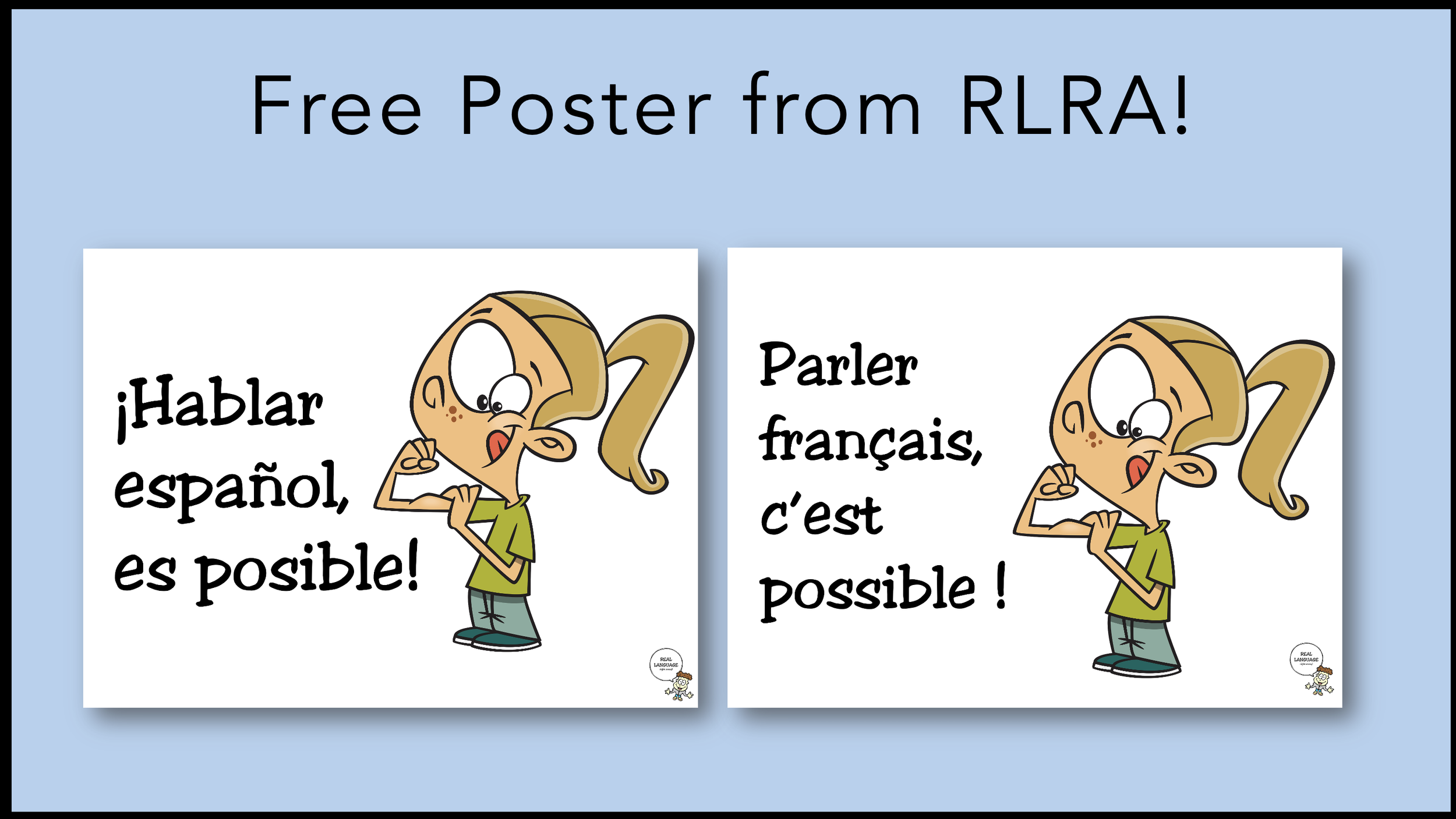
To encourage you and your students, we are offering this free poster for your classroom! Also, stay tuned for more target language tips, and be sure to subscribe to our newsletter so that you don’t miss the next one!