In our first post, we talked about believing that the students can use the target language exclusively in class with the right supports. The second step is holding them (and yourself!) accountable—making sure that your expectations for your class and what you accept from your students lines up. There has to be a system in place!
Here are a few things to remember to set yourself up for success:
Make sure you are speaking in the target language
If a student starts to speak English, make it clear that it is not the behavior you expect!
Give the students what they need to be successful in speaking through visuals and language-learning activities that give them plenty of language to work with! (Our resources are perfect for this 😊)
In our lower school program, we don’t have a formal grading system, so the accountability comes in having the teacher set clear expectations. Once students have entered the French classroom, they are to be speaking solely in French. If they come in chatting in English, I might have them exit the room and try again. We often start the class with the chants (chant 1 + chant 2), which clearly signal our expectations that we are going to function in the target language. If a student does speaking English, I will give them a reminder first. If it continues, I might write their name on the board. My students respond quickly to this, and an apology, in the target language, (which they learn in chant 2!) will quickly get their name erased.
In our middle school program, where students have a formal grading system, we have an accountability system that works very well. You can read about it in detail here, but the idea is that students earn points for speaking in the TL, and they lose points for speaking English. I have used this system for over 20 years. It is easy to implement, and it works very well.
We use a similar system for our immersion trip to Quebec at the end of 8th grade. Students are awarded 200 participation points for the 5-day trip, and if we hear them speaking English, they lose 10 points. They can work to win their points back by earning extra credit tickets (billets), with which we are very generous. Many students come back with far more than 200 points, and their grades end up being inflated in the last trimester. Left to their own devices, these 13 and 14 year-old students would not be practicing much French during a class trip. With the system in place, they are motivated, feel a great sense of accomplishment, and they make so much progress as language learners.
I teach a weekly after-school class for my 10 year-old son and 5 of his classmates from school in a study room at our local library. I have been doing this for nearly two years, and I haven’t been as strict about the use of English in this context until recently. When we started back up in the fall, I noticed that the kids would quickly start chatting about things like Harry Potter and social dynamics in their class, and we were getting off track. I knew they could do better, and I had to do something about it.
I needed a system, but without the structure of the school setting, I wasn’t sure how to keep them accountable. I wanted to give them extra credit tickets, but they wouldn’t be attached to a grade. I also didn’t want it to become a competition between the students in such a small group. So, I decided that they could earn the billets collectively. If they participate well and speak in French, I encourage them by throwing some billets in a basket. If they speak English, I take a billet out of the basket.
At the end of class, we count the billets and they try to do better the next time. We keep track of their totals. I have been doing this for about 6 weeks so far, and it has transformed the class. They are stopping to think about how to say things in French. They are speaking better French. They are feeling great about it, too! In this situation, the billets are mostly symbolic and actually a bit meaningless, but the students still like to see them dropped in the basket. The practice of using the billets signals the expectation that we are speaking only in French.
Through this, I learned that I have to find a system that works for the situation. I hope these ideas are helpful, and that you can find something that works for you and your students.
For further reading on keeping things in the Target Language, please check out this post.
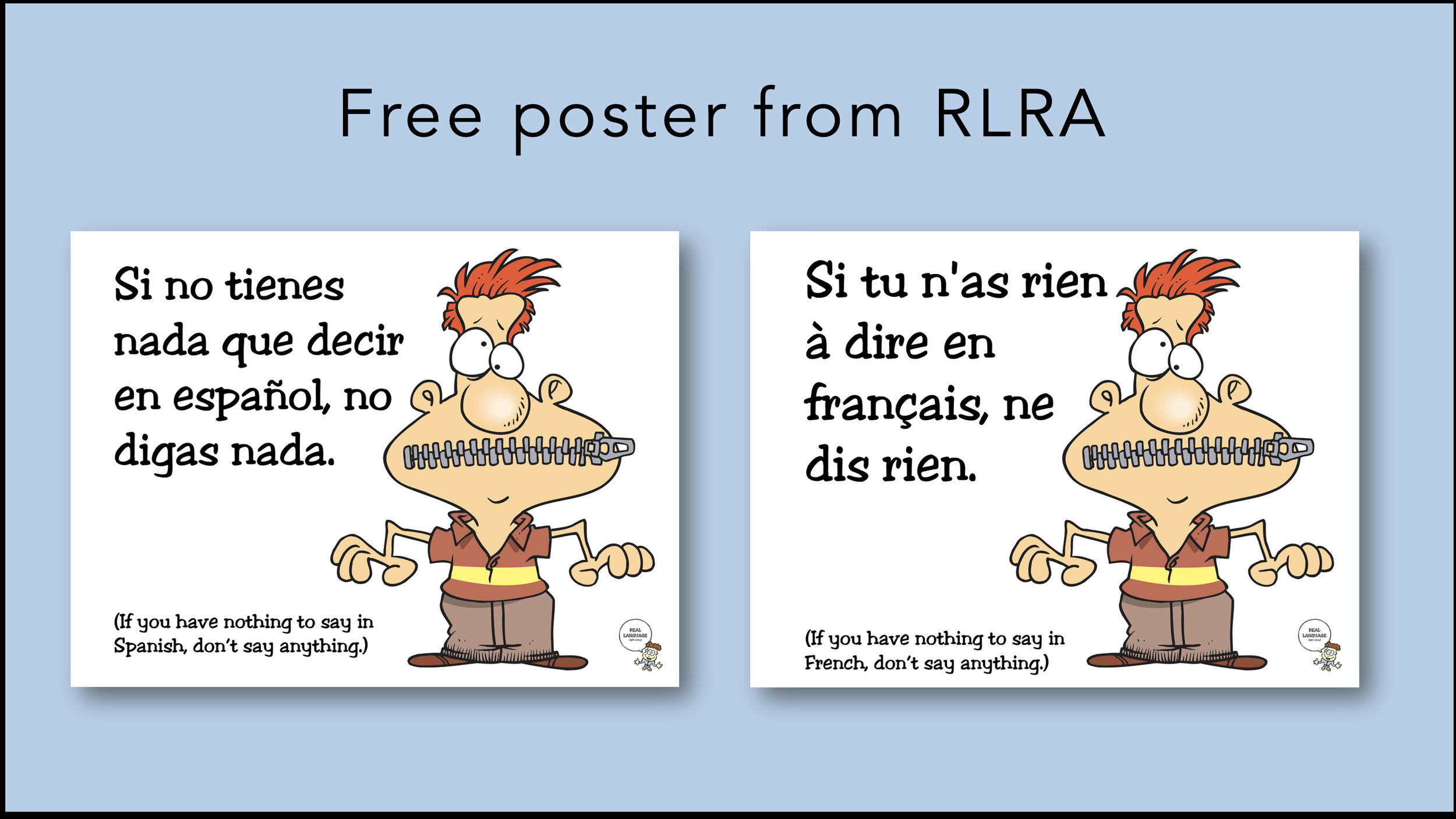
And here’s a fun poster to remind your students to speak only in the target language!